
Chinese gravel frames for bikepacking: rack, fender and 50 mm evidence
For a Chinese gravel frameset with at least 700×50C clearance AND documented rear-rack and fender compatibility, CFR696 is the only documented feature match among these three. LCG071S-PRO has useful rack-load evidence but unresolved fender approval; G028’s wider tire claim does not establish carrying approval. Use that difference to narrow enquiries, then draw the packed bike before ordering the empty frame.
50 mm, rear rack and fenders: what is documented
The screen requires all three features together. It does not require three winners. A documented feature match is a starting point for an exact-order check, not approval of your loaded build. “Unknown” means the inspected evidence does not establish the claim; it does not mean incompatible.
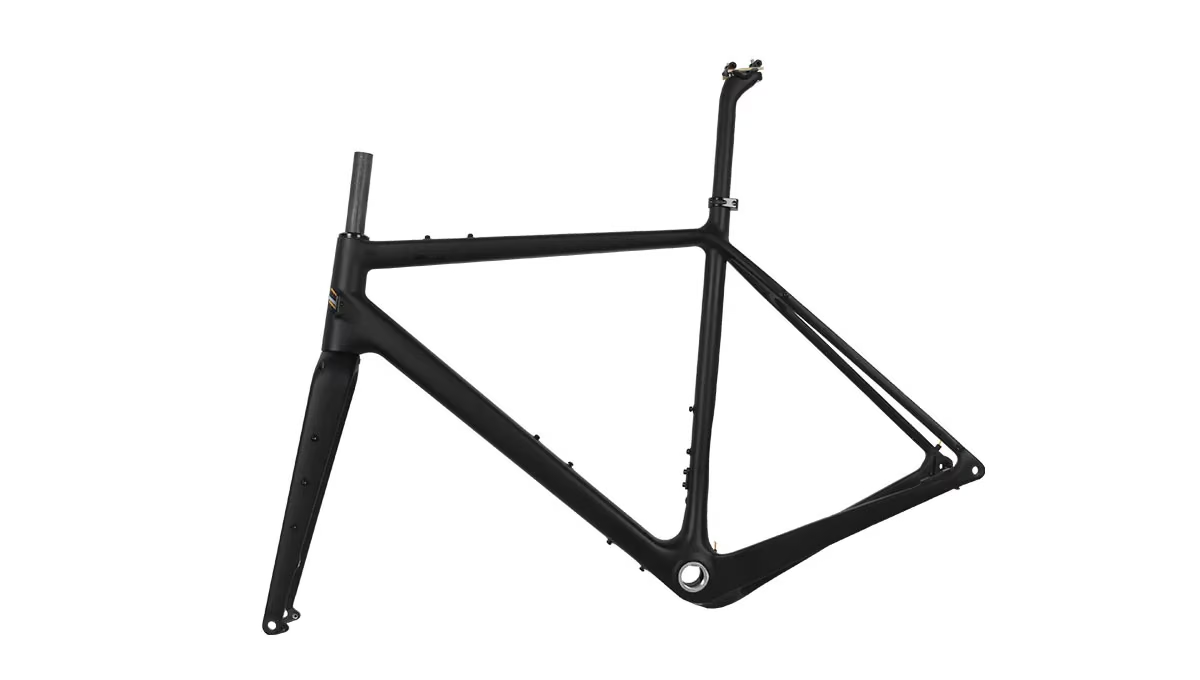
Carbonda’s official CFR696 page states 700×50C and rack/fender compatibility. The direct page was unavailable in this review; indexed official text and our retained earlier record support that feature screen. Confirm the ordered revision and its load instructions. Neither the applicable carrying limits nor the maximum tire width with fenders is established here.
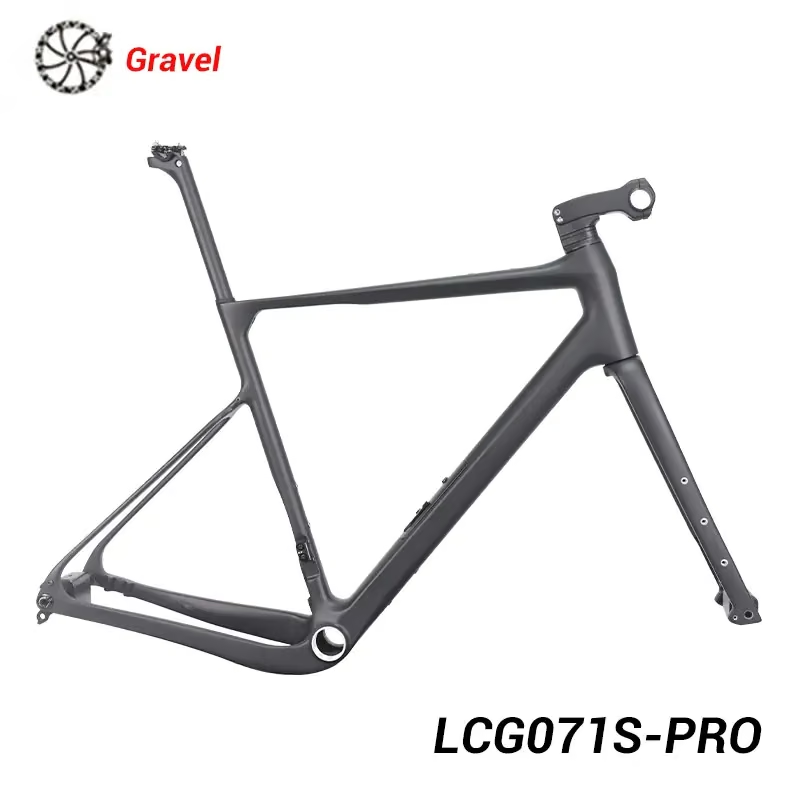
LightCarbon’s linked diagram declares 25 kg at the LCG071S-PRO rear rack and 3 kg per fork side. These are separate manufacturer limits, not a combined allowance or system-mass limit. Match the frame, riveted fork, carrier and fasteners to the instructions. Fender approval remains unknown, so it does not pass the strict screen.
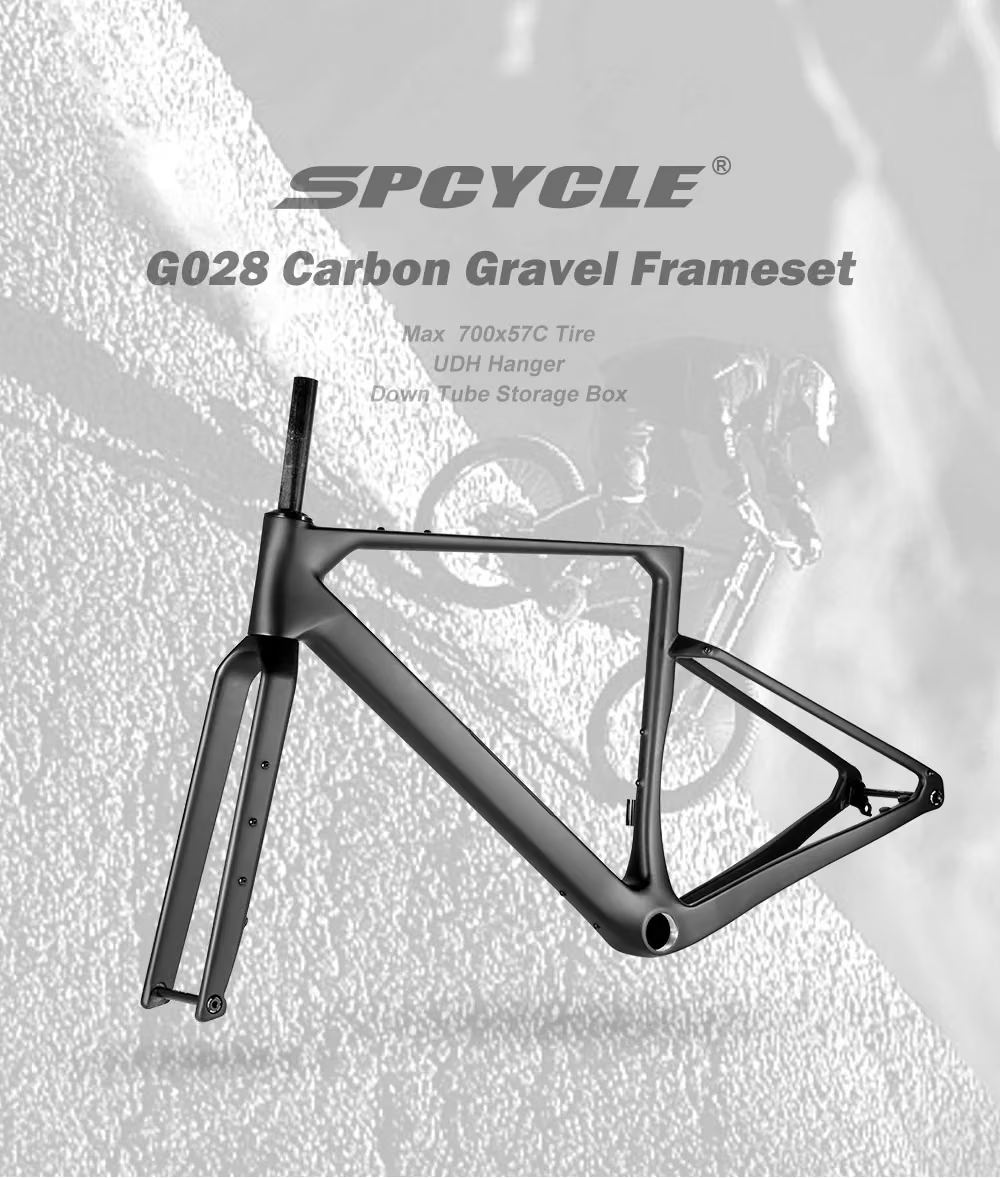
The exact SP-G028 listing states 700×57C. Visible holes and a customer’s fork question do not approve a rear rack, fenders or a load. Keep it under investigation rather than counting it as a qualifying alternative.
| Frameset | 700C limit | Rear rack | Fenders | Declared carrying limits | Strict screen |
|---|---|---|---|---|---|
| Carbonda CFR696Mount evidence | 50 mm | Documented | Documented | Rear rack: Unknown; Each fork side: Unknown | Meets documented feature screen |
| LightCarbon LCG071S-PROMount evidence | 50 mm | Documented | Unknown | Rear rack: 25 kg; Each fork side: 3 kg | Not established |
| SPcycle G028Mount evidence | 57 mm | Unknown | Unknown | Rear rack: Unknown; Each fork side: Unknown | Not established |


Let the luggage decide the next enquiry
Need both a rear rack and fenders? Start with CFR696’s documented features, then obtain the revision-specific limits and the tire-with-fender envelope. Need fork cargo as well? LCG071S-PRO gives a concrete load basis to discuss, provided you order the matching riveted fork and resolve fenders if required. For G028, request the missing approvals before choosing carriers.
A 50C or 57C maximum is not permission to run that size under a fender. Measure the inflated tire on your rim and obtain the required clearance for mud, fender and movement. Keep rack mass, carried luggage, rider mass and total system mass distinct.
Open the three-frame comparison for the wider specification and dated cost context. Different frame-weight sizes, finishes and package contents do not support a lighter loaded-bike winner.
Make a luggage map
Make four columns: bag or bottle, filled mass, attachment and approved load limit. Count water at the start of the longest section without supplies, not just an empty bottle. Include rider, bike and luggage when checking the total system limit. Check each attachment against the exact frame, fork and accessory instructions.
Keep unknown load limits open. A seller saying “touring ready” does not resolve the permitted load on a particular fork boss or rack attachment. Get a written answer tied to the revision you will receive.
If the same bike has to carry a laptop during the week, use our gravel commuting checklist to plan everyday luggage too.
| Luggage position | Fill in before ordering | Evidence still needed |
|---|---|---|
| Rear rack | Rack mass + luggage mass; exact rack and hardware | Frame/rack limits and revision-specific installation |
| Fork sides | Mass on each side; exact fork and cages | Matching fork option, per-side limits and fasteners |
| Fenders and tires | Inflated width, rim and selected fender | Approved tire/fender envelope and movement clearance |
| Whole bicycle | Rider + bicycle + all luggage | Applicable total-system mass limit |
Check the exact frame and fork
The LightCarbon LCG071S-PRO and ICAN GRARO are examples to investigate, not an approved loaded-bike recommendation. Do not transfer a mounting or tire claim from a similarly named frame. Ask for the current drawings and the included fork’s identification.
LightCarbon’s current page describes three fixing points on each fork leg by default, plus an option without them. Put the fork choice in the order confirmation; the number of holes is not a luggage-load rating.
ICAN’s GRARO page describes the China-warehouse fork as without mounting bolts by default and asks for an order note for the alternative. Confirm the exact fork and hardware, plus approval for your intended rack or cages; the note alone guarantees neither a configuration nor a load limit.
Check the space the bags consume
A frame bag may obstruct bottles; a saddle bag may approach the rear tire; a bar bag may interfere with controls or hoses. Test these interactions in the actual size and planned riding position. Nominal bag capacity does not tell you whether your hands can use the controls or whether the bag stays clear under load.
Give the packed bike a short trip
Use a local shakedown with your full intended load before a remote trip. Check handling, bag movement and access to tools. Plan compatible hanger, axle and drivetrain spares from exact part numbers. A nearby loop with the complete camping kit is a useful place to learn which bag contains your patience.
Price the carrying hardware and spares before committing to a frameset. Our frameset-to-complete-bike cost guide is a starting point for the wider build budget.
Sources
Source review began . Research methodology.