
Gravel race bike vs adventure bike: choose your main job
On Friday night, one rider is pinning on a race number. Another is trying to fit a cooking pot into a frame bag. Both want a gravel bike. Before comparing frames, decide which of those evenings looks more like yours: the answer changes what needs to fit, what needs to be easy to fix, and which compromises are worth paying for.
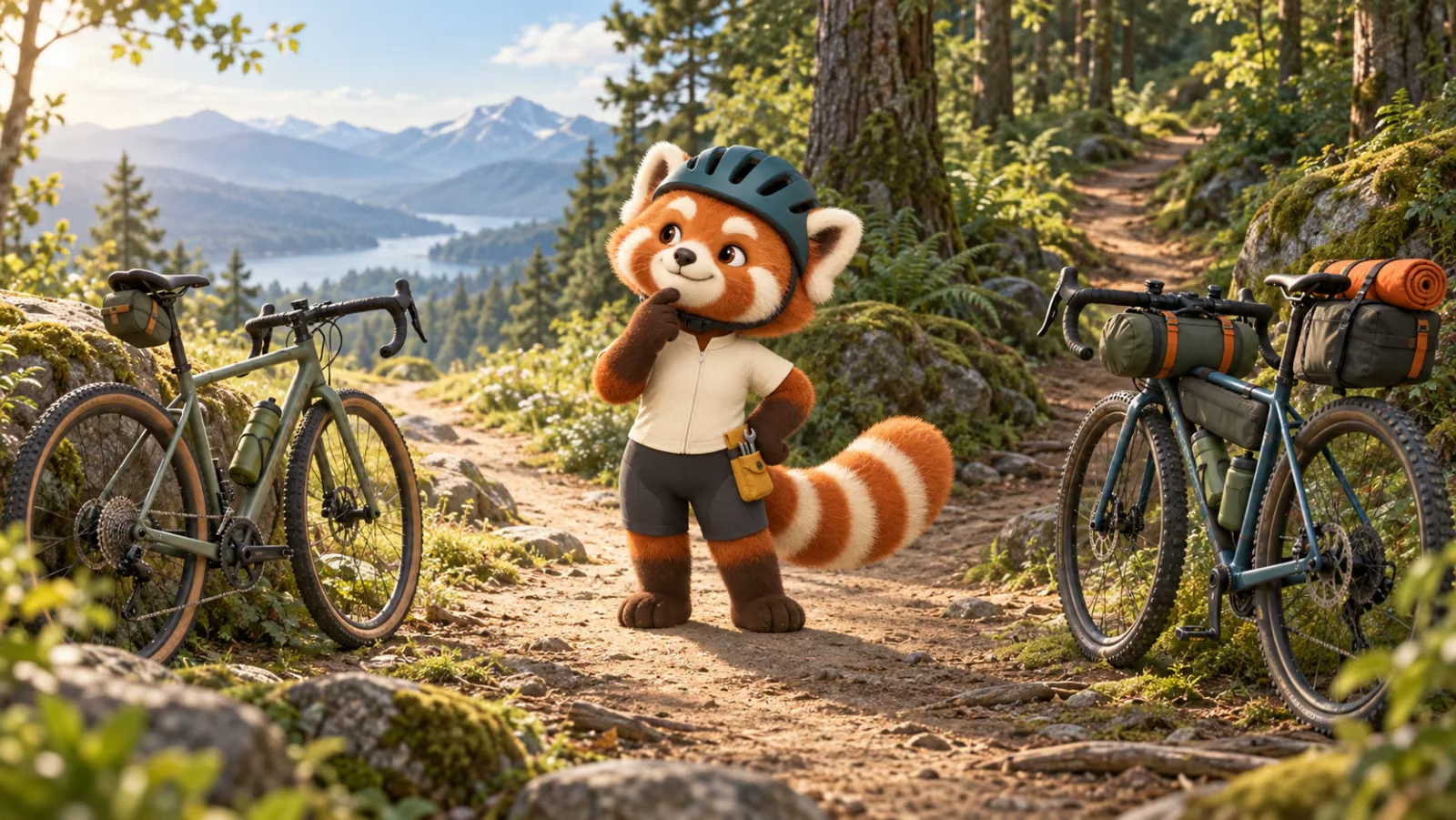
Start with your hardest day
For a race, use the actual event route and rider information: duration, surface, climbs, feed stops and access to help. For a trip, add your packed kit, the distance between water stops and what happens if a part fails. A lovely forest-road photo answers none of those questions.
Fill in both columns below. A race can be remote and rough; a touring day can be short and supported. Let your route set the requirements.
| Check | Your race | Your loaded trip |
|---|---|---|
| Time on the bike | Expected duration and position you can sustain | Longest day, including time riding when tired |
| Hardest climb | Gradient and surface; required low gear | Same check with your planned luggage load |
| What must fit | Food, water and event-required kit | Packed bags, water and any camping kit |
| Help after a mechanical | Event support and realistic exit points | Parts, tools and distance to practical help |
Read beyond “race” and “adventure”
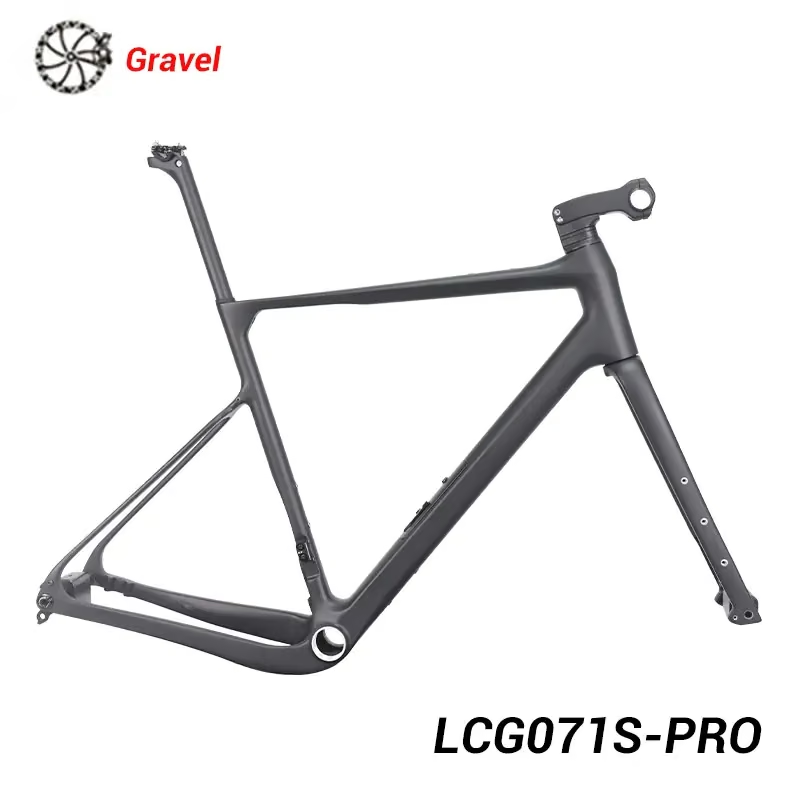
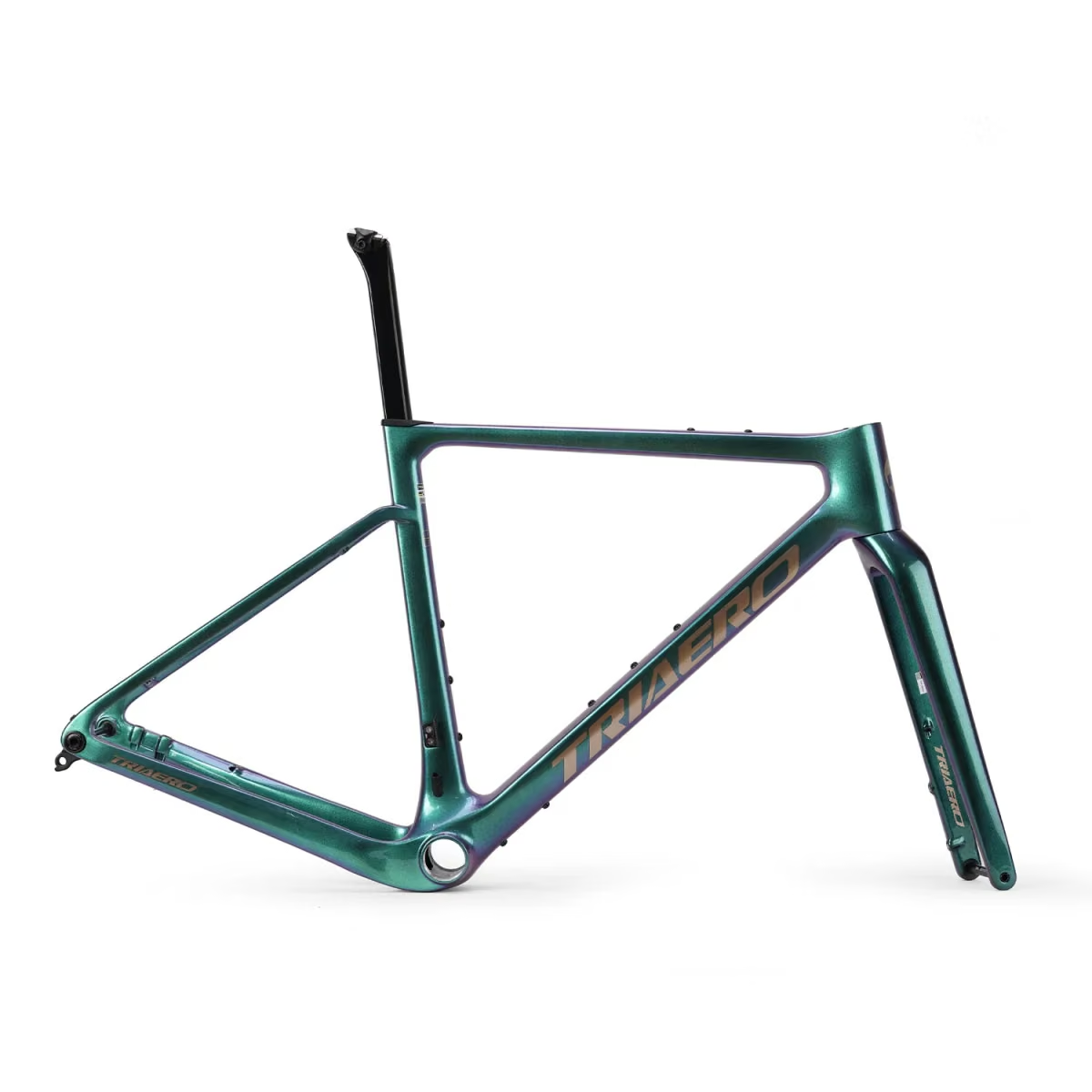
The ICAN GRARO and LightCarbon LCG071S-PRO are concrete frames to compare, not ready-made answers to either column. Check the geometry for your exact size, your intended tire and rim combination, and how you will carry the kit. A category label does not tell you whether a packed frame bag fits or whether the cockpit suits a long day.
Fork options matter. LightCarbon's current page describes fixing points on its default fork and a hole-free alternative. ICAN's GRARO page describes a China-warehouse default without mounting bolts and asks for an order note for the alternative. Neither note supplies a luggage load rating. Confirm the exact supplied fork, hardware and permitted loads before choosing a carrying setup; our bikepacking mounts guide explains the questions to ask.
A published maximum tire size is a limit to check, not a recommendation for every ride. Check frame and fork clearance, tire–rim compatibility and space for mud with the actual parts. Likewise, choose a low gear for the climb you must ride, then check that the complete drivetrain combination is supported.
Choose where you will accept a compromise
Write down what a change of job would involve: tires or wheels, bags and mounts, gearing, tools, setup work and storage. Separate a simple swap from work you would ask a shop to do. If wheel changes are part of the plan, read our guide to one bike with two wheelsets before assuming the swap will be trouble-free.
For example, if nearly every ride is a local gravel loop and camping happens once a year, build around the loop and work out a safe, realistic trip setup. If loaded trips are the reason you are buying the bike, make the luggage and climbing requirements part of the original build. This is a way to weigh your own use, not a rule that either frame wins.
Before ordering, finish this sentence: “Most weeks this bike will do ___, so I accept ___ when I use it for ___.” Then list the parts and work needed for that second use. The camping pot may stay at home on race day; the ability to carry it safely still needs an answer.
Sources
Source review began . Research methodology.