
Tubeless road pressure: a calculator for the start, 5 bar as the hookless ceiling
There is no universal starting pressure, but there are hard ceilings. On hookless road rims the ETRTO standard caps pressure at 5 bar (72.5 psi) even when the tyre's sidewall allows more, and Continental lowers its hookless caps as tyres get wider: 73 psi up to 29 mm, 65 psi at 30–32 mm and 58 psi at 35 mm. Within those limits, a calculator such as Zipp's gives the starting value and a ride log tells you where to go from there.
The hookless ceiling comes first
Schwalbe's hookless guidance, read on 5 November 2026, gives the ETRTO limit of 5 bar for road bikes on hookless rims and says it applies even when the sidewall states a higher maximum. Continental's own hookless figures in our Road tires reference fall with width: the Grand Prix 5000 S TR is capped at 73 psi in 25 and 28 mm, 65 psi in 30 and 32 mm and 58 psi in 35 mm. If a calculator gives more than the cap for your width, the answer is a wider tyre, which needs less pressure, or a hooked rim, not a higher number. Where the rim, the tyre and the standard give different limits, the lowest one applies, and none of them is a recommended riding pressure.
Stop for tyre instability, rim impacts, bead problems or unexpected pressure loss and inspect the system; more or less air is not a repair. If the pressure your load needs cannot fit within the approved combination's limits, choose a different approved tyre and wheel with the assembler.
What the calculator needs
Zipp's calculator asks for ride style and whether the road is wet or dry, the total weight of bike and rider, front and rear tyre width and casing, wheel diameter, rim type and inner rim width; it publishes no example values. Use the marked width where a field asks for it, and keep the measured width in your notes.
Schwalbe gives no general number either, but says tubeless tyres can generally run slightly lower than tubed ones, that losing about 1 bar a month is normal and that pressure should be checked at least once a month.
Keep front and rear separate
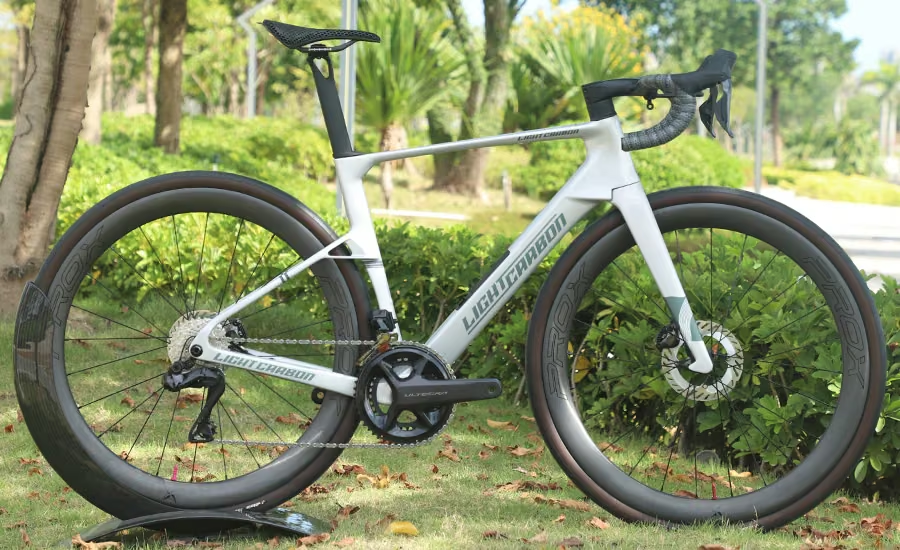
For an LCR018-D road build, keep a small log for a familiar route. Use the same gauge so changes are comparable. Record the actual pressure, load, surface and observations, not just “felt fast.” Avoid changing tyre, pressure and route together if you want to understand the result.
Use the hooked-versus-hookless guide to check the combination's approval, and the tubeless-versus-tubes guide for the separate maintenance choice.
| Field | Record |
|---|---|
| Setup | Tyre, rim, marked/measured width and approved limits |
| Load | Rider + complete bicycle + luggage; each once |
| Before the ride | Front/rear pressure, gauge, conditions |
| After the ride | Pressure retention, handling, impacts or faults |

Sources
Source review began . Research methodology.