
Small rider, small frame: check more than the size label
An XS frameset can look like a bargain until its long integrated cockpit puts the brake hoods out of comfortable reach. For a small rider, the frame and the parts need to work together. Check the complete position before paying for the smallest box.

Start with a position you can use
Obtain the exact revision’s geometry chart in millimetres. Compare frame stack and reach with a comfortable existing bicycle or a qualified fit brief. Then compare the cockpit and saddle setup too: the frame chart does not show where your hands and hips will end up. Our frame-sizing guide explains that comparison.
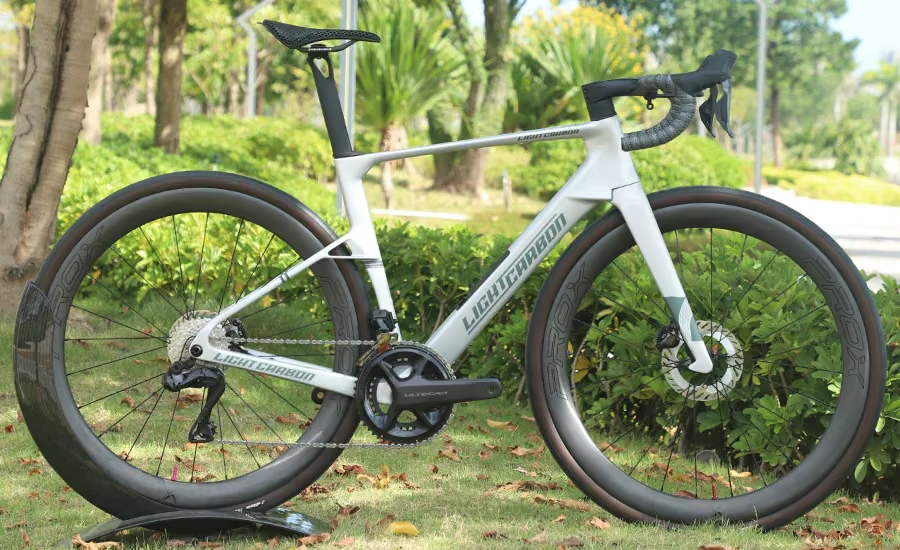
The current LightCarbon LCR018-D chart lists 365 mm reach and 519.6 mm stack under the column labelled 470. Those are manufacturer frame figures, not a recommendation for your height. The model record retains the chart’s qualifications. Ask the seller to identify the revision and proposed cockpit in the same quotation.
Can the supplied parts reach your position?
Ask which bar width, stem length, crank length and seatpost offset actually come with the selected size. Confirm any alternatives before paying. A short frame with a long fixed cockpit can still put the controls too far away. For a proposed change, check compatibility and the fitting work it requires; our endurance-versus-aero guide explains why adjustability belongs in the buying decision.
Ask for the lowest usable saddle height with the proposed seatpost and saddle. Check the post’s minimum insertion, permitted maximum insertion and any internal obstruction. Minimum insertion limits how far you can extend it; a post that bottoms out can stop the saddle going low enough. Trek’s owner manual explains the minimum-insertion limit. Follow the actual frame and post instructions, and have a qualified mechanic resolve any conflict. Do not cut a post without the manufacturer’s approval.
Do not choose crank length or bar width from height alone. Also check whether you can comfortably reach and operate the brake levers. These choices deserve their own fit assessment. Include necessary replacement parts and fitting work in the quoted cost.
Your shoes need space too
Toe overlap means a shoe can contact the front tire or mudguard when the wheel turns. The actual wheel, tire, crank, pedal and shoe position all matter. Have a shop check the planned combination, including mudguards if you intend to use them. A side-on product photo cannot answer this question.
Trek’s riding guidance warns against pedalling at very low speed with the handlebar turned where toe overlap can occur. Discuss the result and handling guidance with your fitter or mechanic before riding. Switching to a smaller wheel needs explicit approval for that frame and build; another brand’s small-size design is not permission for a conversion.
Send this brief before you send money
Send your contact-point requirements or fit brief and ask for a written proposal covering the frame, cockpit, saddle range and shoe clearance. Use the checklist below to compare answers. If the response is only a height-to-size table, ask again for the missing setup details. A clear quotation should also identify substitutions and the cost of any changes.
| Check | Ask the seller or fitter for | Keep with the quotation |
|---|---|---|
| Frame | Exact revision, stack, reach and standover measurement basis | Matching geometry chart |
| Cockpit | Bar and stem dimensions, lever reach and approved alternatives | Exact supplied parts and change cost |
| Saddle | Lowest usable height and both frame/post insertion limits | Instructions for the proposed post and saddle |
| Cranks and pedals | Supplied crank length and the planned pedal/shoe setup | Fit assessment and any replacements |
| Front-wheel clearance | Check with the actual shoes, tires and optional mudguards | Assessment of that complete combination |
Sources
Source review began . Research methodology.