
How to size a Chinese bike frame before ordering online
Two bikes marked medium can put your hands in different places. Before ordering, compare the whole position—frame geometry, cockpit and saddle—with a setup that fits you. A size label is a particularly expensive thing to guess from when the return trip involves international shipping.

Start with a position you can describe
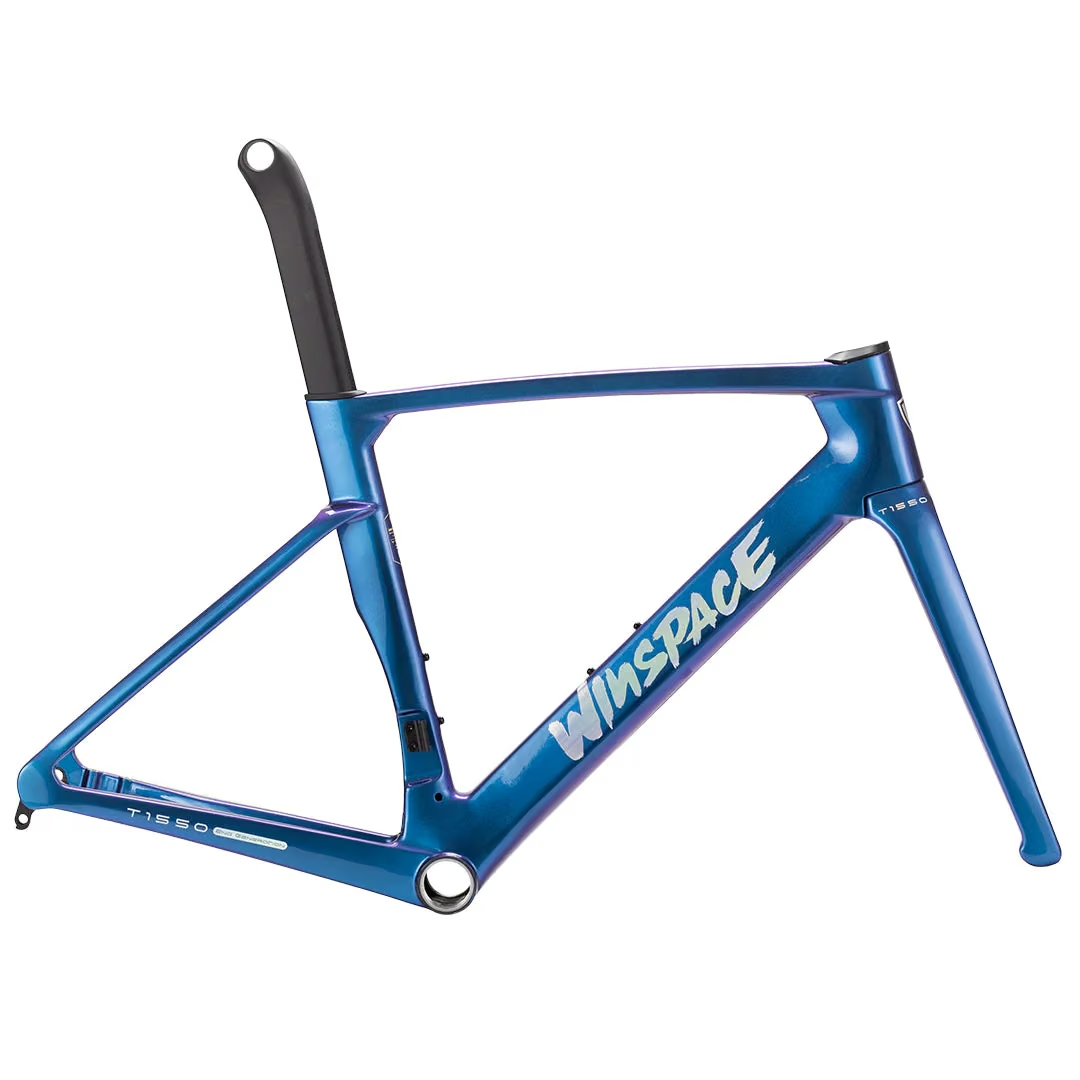
If you own a comfortable bike, record its exact model, year and size, then obtain its geometry chart. Note the saddle position, cockpit dimensions and spacers used. Photos from the side can help a fitter understand the setup, but a photo alone is not a complete fit measurement. Match the generation too: the Winspace photograph below shows T1550 Gen 2, not every frame sold under the T1550 name.
Write down what you want to retain and what you want to change. Are you comfortable on the hoods for your normal ride, or trying to reduce a persistent reach problem? A new frame should solve a named requirement, not merely resemble a professional’s bike. If you are still deciding how low you want to sit, start with our endurance-versus-aero frame guide.
If your current bike is uncomfortable, do not turn it into the unquestioned template. A fit consultation before buying can be more useful than paying for adjustments after an integrated cockpit has been ordered.

Compare coordinates, not clothing sizes
Frame stack is the vertical distance from the bottom-bracket center to the top-center of the head tube; reach is the horizontal distance between those points. Together they describe where the front of the frame ends. Your hands sit farther along a chain of headset cover, spacers, stem, handlebar and hoods.
For a made-up example, compare a current frame at 560 mm stack and 380 mm reach with a candidate at 545 mm and 390 mm. The candidate’s head-tube reference point is 15 mm lower and 10 mm farther forward. That does not mean “add 15 mm of spacers and buy a 10 mm shorter stem”: steering angle, stem angle and the rest of the cockpit also change the result.
Compare the whole setup, including saddle position and the manufacturer’s adjustment limits. A nominal 54 from one brand need not match a 54 elsewhere. Use Winspace’s size guidance, or the relevant brand chart, to shortlist sizes; ask a fitter to explain how each shortlisted setup reaches your target position.
Check the front end you can actually order
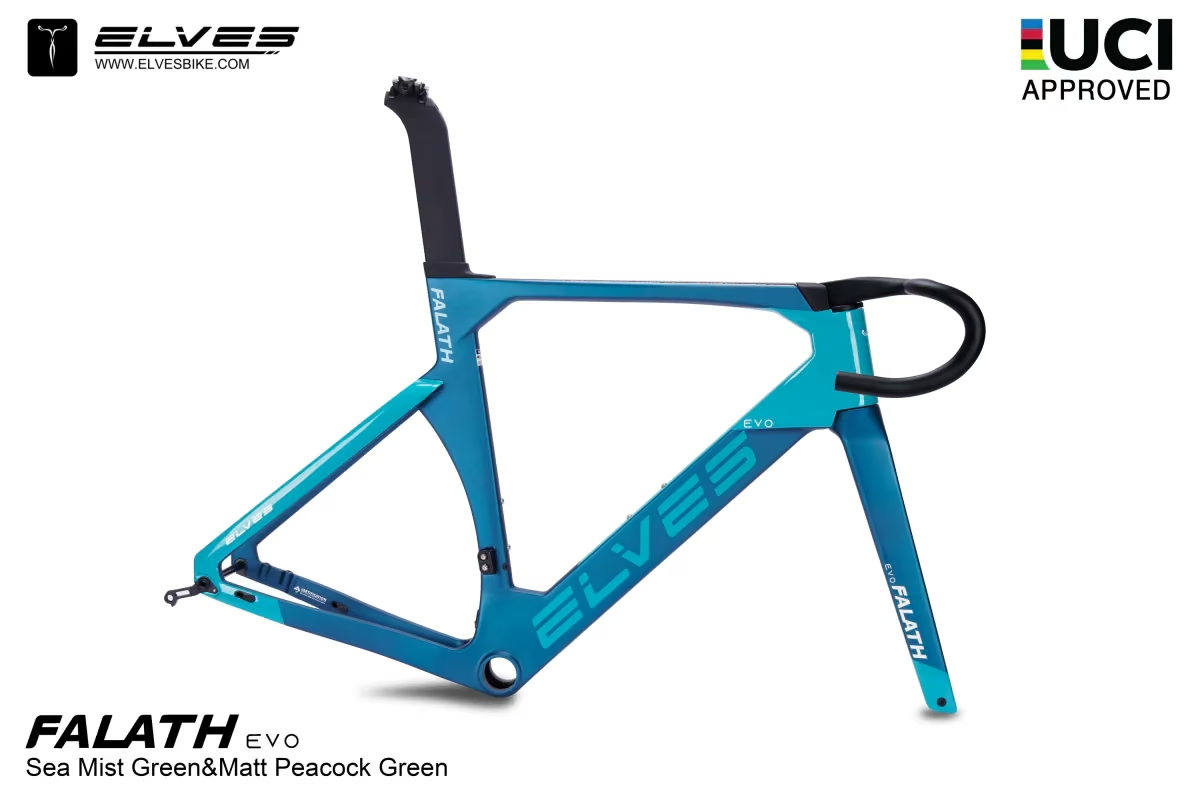
Before choosing a frame, list the cockpit sizes the seller can supply with it. Ask how width is measured and which stem-length options are available. Do not assume that a compact frame comes with a cockpit that suits your shoulders and reach. The Falath EVO storefront currently describes EVO+ frames and says the EVO handlebar costs extra. The EVO reference photo below is not a promise of that exact generation or included cockpit. Get the exact geometry chart and an itemized package.
Request the current manual’s permitted spacer arrangement and adjustment limits, plus the seatpost insertion and saddle-rail requirements. Winspace’s fit guide also calls for respecting manufacturer spacer and insertion limits; it does not replace your exact frame and cockpit manuals. A forum photo with a taller spacer stack is not permission to reproduce it.
If the desired position relies on parts the seller cannot supply or an adjustment the manual does not permit, revisit the frame choice. An attractive frame should not require improvising a safety-critical interface.
Fill this in before asking “which size?”
Copy this table into your notes. Use millimeters and the same measurement method for both bikes. Leave an unknown blank; the empty cells are the questions to resolve with your fitter and seller.
Send the completed brief with the geometry links and a sentence about your normal ride and any discomfort. Ask for the proposed cockpit and spacer setup, not just a frame-size recommendation. Approve paint after the position works on paper. For the next ordering step, our Winspace buying guide covers seller routes and questions to settle before payment.
| Item | Current comfortable setup | Proposed setup / question |
|---|---|---|
| Frame model, year and size | Fill in | Fill in |
| Geometry chart link; stack / reach (mm) | Fill in | Fill in |
| Stem length / angle; bar reach / drop | Fill in | Confirm supplied cockpit |
| Bar width and where it is measured | Fill in | Confirm measurement convention |
| Headset cover and spacers below stem | Fill in | Check manual limits |
| Saddle model, height and setback | Use fitter’s measurement method | Check achievable position |
| Seatpost offset and insertion limits | Fill in | Confirm exact post |
| What should stay / what should change | Describe comfort and riding | Have fitter explain the changes |
Sources
Source review began . Research methodology.