
Comparing two geometry charts: match stack and reach together, not the size label
A size label is a name, not a measurement. INCOLOR's Speedster SR 54 and LightCarbon's LCR018-D 540 print the same 383 mm reach, yet the LCR018-D's head tube ends 29 mm higher. Compare stack and reach as a pair, and only after both charts are confirmed to describe the frames you can buy and to measure the same things.

Identify the chart, not just the brand
Record model, revision, chart date or access date, size labels and source URL, and keep the original diagram. A current web table and an older PDF may both be genuine and still describe different revisions: LightCarbon’s LCR018-D product table and its own 2026–2027 catalog disagree on the standover tyre basis and on the size-580 front centre (when a chart does not add up). The comparison below uses INCOLOR’s Speedster SR table as checked on August 29, 2026 and the LCR018-D product table observed on October 3, 2026.
Normalize units and references
Convert centimetres to millimetres where necessary: 38.0 cm is 380 mm. Distinguish actual and effective top-tube length, frame stack and handlebar height, and the tyre basis of any standover figure; LightCarbon’s two documents state 700C×32C and 700×38C for the same standover heights, so those figures are not comparable even with each other. If one chart omits a dimension, leave the cell blank rather than deriving it from angles the table does not define.
Treat a size label as a name. INCOLOR lists its Speedster SR 54 for riders of 172–178 cm; LightCarbon lists the LCR018-D 540 for 180–186 cm and the 520 for 173–179 cm, both as rough references. Head-tube length is a poor shortcut too: the LCR018-D 520’s head tube is only 1.9 mm longer than the Speedster SR 54’s, yet its stack is 12 mm higher, because stack also includes the fork, the lower headset and the bottom-bracket drop (78 mm against 75 mm).
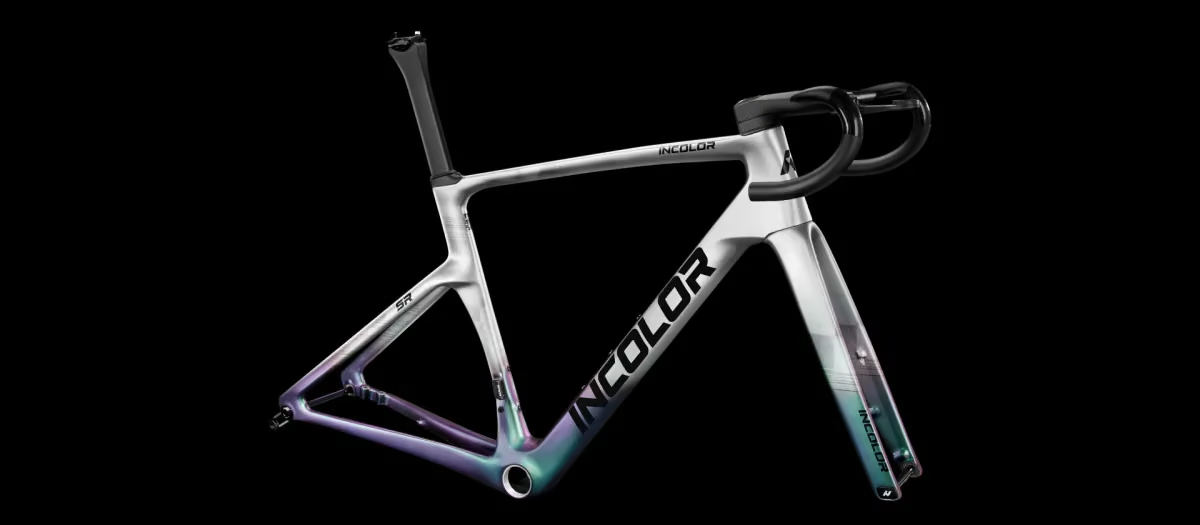

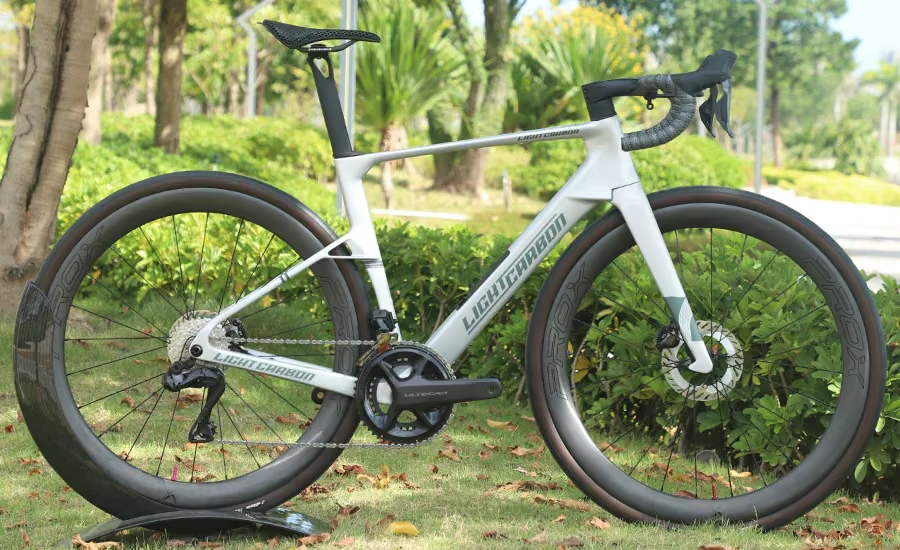
Speedster SR 54 against three LCR018-D sizes
No LCR018-D size matches the INCOLOR Speedster SR 54 on both numbers. The LCR018-D 540 has the same reach but 29 mm more stack; the 500 nearly the same stack but 12 mm less reach. The 520, listed for the same riders, is 12 mm taller and 6 mm shorter.
Spacers turn that into a choice. At the Speedster SR 54’s 72° head angle, 12.6 mm of spacers raise its bar 12 mm and move it 3.9 mm back, leaving it 2.1 mm longer than an LCR018-D 520 with the same stem and bar. Matching the 540’s height would take 30.5 mm of spacers and leave the Speedster 9.4 mm shorter. So a rider who needs a low front end gets it only from the Speedster SR, while one who wants the 520’s height can have it on the Speedster with about 13 mm of spacers, if INCOLOR’s cockpit allows that stack (spacer limits on aero cockpits). These figures stop at the top of the head tube; headset covers and cockpit dimensions differ between the frames and come on top.
| Measurement | Speedster SR 54 | LCR018-D 500 | LCR018-D 520 | LCR018-D 540 |
|---|---|---|---|---|
| Maker's rider height | 172–178 cm | 166–172 cm | 173–179 cm | 180–186 cm |
| Stack | 540 mm | 538.1 mm | 552 mm | 569 mm |
| Reach | 383 mm | 371 mm | 377 mm | 383 mm |
| Head tube | 135.1 mm | 125 mm | 137 mm | 157 mm |
| Head / seat angle | 72° / 74° | 71.3° / 74.5° | 72° / 74° | 72° / 73.7° |
| Front centre | 591.3 mm | 589.5 mm | 589.8 mm | 601.6 mm |
| Wheelbase | 984.6 mm | 992 mm | 992.2 mm | 1004.8 mm |
Finish with differences and open questions
Keep the reliable differences in a short table like this one and list the open items separately: here, LightCarbon’s standover basis, its size-580 front centre, and the 500’s front centre and wheelbase, which run about 4 mm longer than its other cells give. Then compare complete cockpits against the position you ride and send the remaining precise questions to the maker. “Which revision is this chart?” is more answerable than “Will this bike fit me?”
Use our stack and reach guide to identify the reference points, and the unknown-spec checklist to handle missing answers.
Sources
Source review began . Research methodology.