
“Equivalent component” on a bike order: ask equivalent in what?
The bike arrives with a different crank. The seller calls it equivalent. That word does not tell you whether the gearing, fit, chainline or replacement parts still match your plan. Agree on a substitution process before the order ships.
Freeze the actual parts list
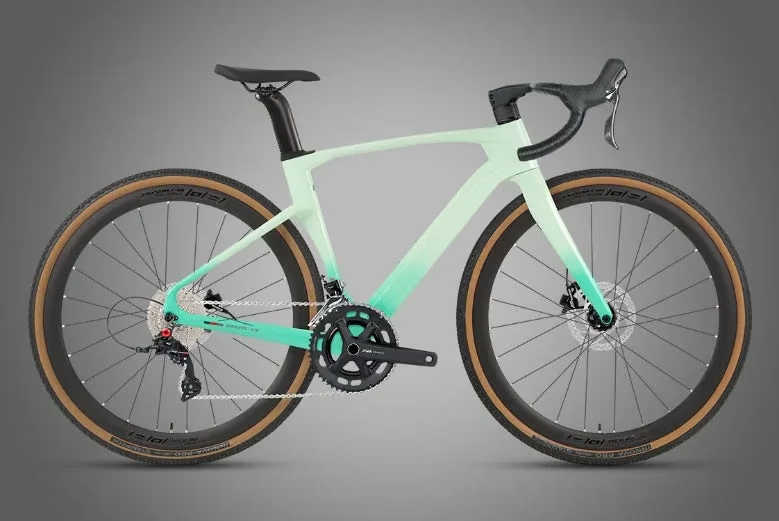
For a Twitter V3 RS, the dated catalogue record is a comparison starting point, not a guarantee of today’s supplied build. Request exact current lever, derailleur, crank, cassette, chain, wheel, tyre and cockpit specifications on the quote. Include size-dependent parts such as crank length and bar width.
The factory V3 listing distinguishes several configurations. Use it to identify the advertised package, then obtain the actual supplied component codes; a comparison table does not approve mixing parts between those builds.
Compare the consequence of each change
Ask for the proposed replacement’s exact code and why it is being offered. Compare dimensions, approved system compatibility, useful gear range, brake/tyre approvals and your local service route. Matching speed count or claimed weight is not complete equivalence. A cosmetic colour change is also different from a drivetrain or cockpit substitution.
Consider a hypothetical quote with 170 mm crank arms and a proposed 175 mm replacement, both advertised for 12 speeds. The pedal radius differs by 5 mm, so the dimensions do not match even if price and claimed weight are close. Ask the fitter or assembler whether that change suits the agreed position. Matching arm length would still leave spindle, chainline, bottom-bracket fit and drivetrain approval to check; one matching number cannot settle the whole substitution.
Put approval before dispatch
A useful order note is: “Please send exact replacement specifications and any price/timeline change for written approval before dispatch. Do not substitute without agreement.” Ask how a rejected substitute affects the order. Keep the final accepted list and inspect delivered parts against it before assembly.
If something differs, document it and contact the seller before altering the part. Evaluate the actual replacement rather than accepting or rejecting it on the brand logo alone. The goal is the build you knowingly bought, not a surprise that happens to have the same number of gears.
Use the seller-route comparison to identify who can authorize the change. If it delays dispatch, revise the preorder timeline before accepting the revised order.
Sources
Source review began . Research methodology.