Changing cassette or chainring? Recheck chain length
A bigger climbing sprocket can fit the freehub and still leave the build wrong. The derailleur needs the approved range and capacity, and the chain needs the correct length for the resulting system. Adding links cannot turn an unsuitable derailleur into a suitable one.
For an illustrative double, 50/34 with 11–34 needs take-up for (50−34)+(34−11)=39 teeth. This arithmetic explains total capacity; it does not prove that a particular derailleur accepts those rings, cassette or chain. Maximum sprocket size is another limit. Treat both as conditions in the manufacturer’s compatibility information.
Do not copy a length from another system
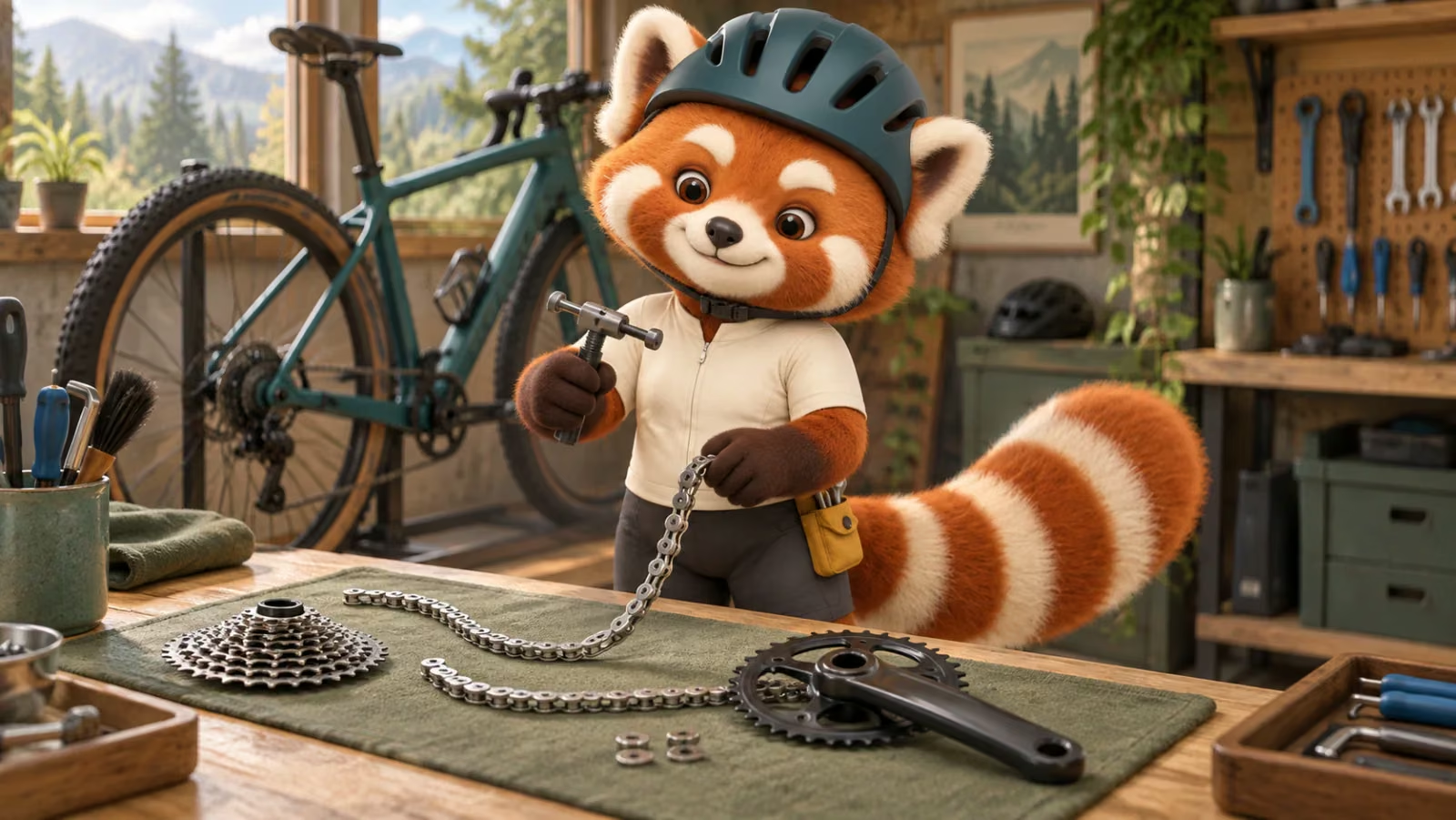
Park Tool’s sizing guide shows that sizing methods vary with drivetrain configuration. Modern systems can have additional specific instructions; the exact component manual takes priority. Do not apply a remembered “add two links” rule to every 1×, 2× or full-mount system. If the gearing is unchanged and replacement is the question, start with measuring chain wear before treating the old length as a reference.
For a GRARO assembly, give the assembler the final ring and cassette codes before the chain is cut. Identify the compatible joining link and whether its maker permits reuse. A chain’s speed count alone is not a complete purchasing specification. The 50/34 example above illustrates capacity; it is not a GRARO build recommendation.
Have the workshop check shifting, chain tension and clearances throughout the permitted combinations before road use. Keep ring teeth, cassette range, derailleur model and chain reference in the build record. The next gearing change then begins with known parts, not a photograph and a guess.