Deep wheels in crosswinds: buy for your exposed roads
The glamorous wheel photograph contains no gusts, open bridges or passing trucks. Your commute might contain all three. Choose wheels for the conditions in which you need to hold a line, not only the rides in which you hope to look fast. Rim depth alone is not a safety rating.
DT Swiss describes steering moment and rim design, including why wind behaviour matters beyond drag. Rim shape, the actual tyre combination and changing wind angles complicate a simple “50 mm versus 60 mm” comparison. A generic crosswind-stable claim without a test basis is not enough to rank two wheels.
Suppose a 60 mm front wheel advertises lower drag at one wind angle, while a 50 mm alternative only says “crosswind stable”. Neither statement compares steering disturbance. Ask for comparable steering-moment results for the exact front wheels, with tyre and conditions stated; without them, handling remains unresolved. The shallower label is not a safety approval.
Name the wind problem you need to avoid
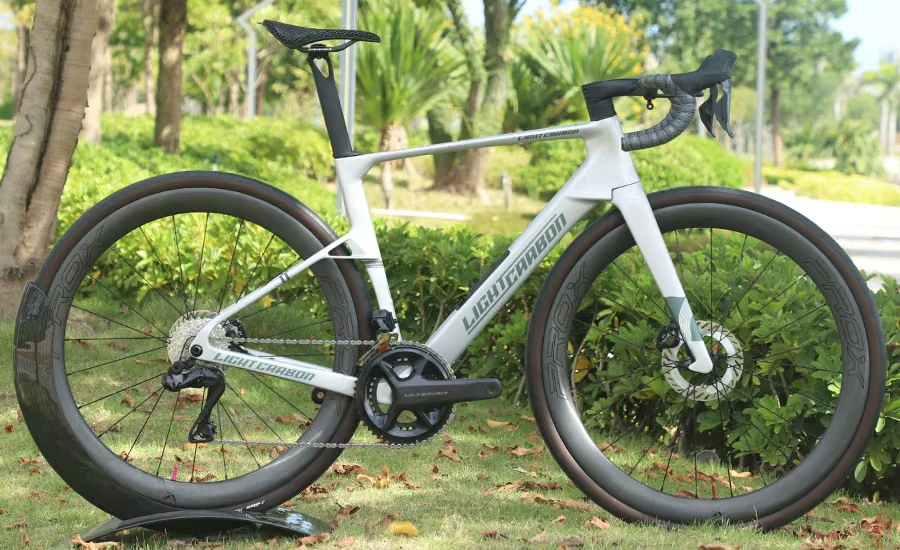
For an LCR018-D road build, record exposed bridges, coastal roads or descending sections you use regularly. Consider your handling experience and access to another wheel option on windy days. There is no honest universal safe wind-speed threshold or rim depth for everyone. Do not turn a test ride into a deliberate gust challenge.
LightCarbon LCR018-D · Model detailsManufacturer’s example build on the LCR018-D frameset; pictured parts are not a confirmed sale package.LightCarbon; see sourcePhoto unavailable; open the source to view it.
Ask for comparable evidence
Look for tests of the exact wheel generation with the tyre, speed and wind-angle conditions stated. Separate measured drag from handling observations and manufacturer promises. Include tyre/rim approval, what each stated mass limit includes, and spare-part support in the shortlist; a reassuring wind claim does not settle them.
If confident handling on your frequent routes is unresolved, compare an approved alternative and its evidence before spending on new wheels. The wheel you can ride comfortably and consistently is more useful than one whose theoretical gain makes you avoid your normal route.